
Key Takeaways
- Routine inspections prevent expensive structural damage
- Roof, skirting, and anchoring systems deserve special attention
- Proper drainage is critical for long-term stability
- Seasonal checklists make maintenance simple and manageable
Protect Your Investment & Avoid Costly Repairs
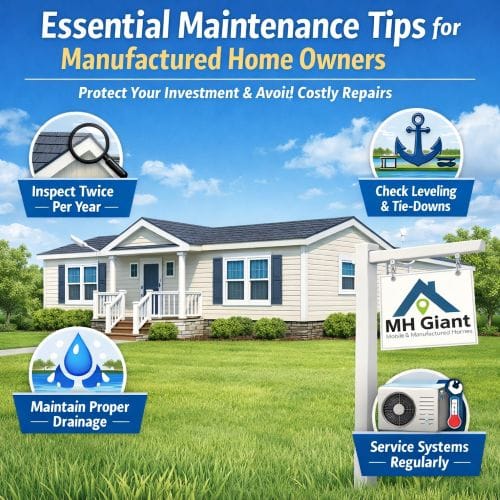
Owning a manufactured home is one of the smartest and most affordable ways to enjoy homeownership. Modern manufactured homes are built to strict federal HUD standards, engineered for durability, safety, and efficiency. Here are some essential Maintenance Tips for Manufactured Home owners to keep their property in top shape.
 But here’s something many first-time buyers don’t fully realize:
A manufactured home, just like a site-built house, requires consistent maintenance.
In fact, because manufactured homes are precision-built systems, staying ahead of small issues can prevent major repairs later.
The good news? Most maintenance tasks are simple, inexpensive, and easy to schedule once or twice a year.
This guide covers everything you need to know to protect your investment, maintain safety, and preserve resale value.
Why Maintenance Matters for Manufactured Homes
Manufactured homes are built in controlled factory environments, which improves quality consistency and reduces construction defects. However, once installed, they are subject to the same environmental factors as any home:
- Wind & Rain
- Snow & Heat
- Humidity & Soil movement
Because manufactured homes sit on a foundation system (piers, blocks, or permanent foundation), moisture control and structural stability are especially important. Following simple Maintenance Tips for Manufactured Home can help prevent costly repairs over time.
Neglecting maintenance can lead to:
- Roof leaks
- Subfloor damage
- Mold growth
- Structural shifting
- Insurance claim denials
- Lower resale value
The goal is not perfection. The goal is prevention.
A twice-a-year inspection can save thousands of dollars.
Roof & Exterior: Your First Line of Defense
If there’s one area that deserves priority, it’s the roof.
Water intrusion is the number one cause of major repairs in manufactured homes.
 Inspect the Roof at Least Twice a Year
 Inspect the Roof at Least Twice a Year
Look for:
- Loose or lifted shingles
- Cracked sealant around vents
- Rust spots (metal roofs)
- Soft or sagging areas
- Loose flashing
If your home has a flat or low-slope roof, pay extra attention to pooling water. Standing water accelerates deterioration.
After major storms, perform a visual inspection, even if you don’t see interior damage.
Reseal as Needed
Sealants break down over time. Reapplying roof sealant around penetrations (vents, chimneys, skylights) is inexpensive and prevents leaks.
Check Siding & Skirting
Skirting does more than improve appearance, it protects plumbing and insulation beneath your home.
Inspect for:
- Cracks or holes
- Loose panels
- Warping
- Animal entry points
Damaged skirting allows moisture and pests underneath your home, which can lead to insulation problems or pipe damage.
Siding should also be checked for loose panels, mold growth or warped sections.
Small repairs now prevent larger structural issues later.
Windows & Doors
Air leaks and water intrusion often begin around doors and windows. Check weather stripping, caulking, lock mechanisms and frame condition.
Replace any worn seals to prevent drafts and reduce energy bills.
Electrical System Safety
Manufactured homes are built to meet federal electrical codes, but routine inspections improve safety and reduce fire risk.
Start by periodically checking your breaker panel. If you notice frequent breaker trips, unusual odors, or visible corrosion, those are warning signs that should not be ignored. Repeated trips often indicate overloaded circuits or wiring issues that need professional evaluation. Every homeowner should know basic Maintenance Tips for Manufactured Home to ensure safety and comfort.
Test bathroom and kitchen GFCI outlets regularly to ensure they reset properly. Replace damaged outlets promptly and avoid plugging too many high-draw appliances into a single circuit. Most residential electrical fires begin with overloaded systems, making simple preventative habits extremely important.
Interior Preventative Care
Interior inspections help catch hidden problems before they become structural repairs.
Pay close attention to ceilings and walls. Water stains, discoloration, or bubbling paint often signal roof or plumbing leaks. Investigate these signs immediately rather than waiting for the damage to spread.
Flooring is another early indicator. Soft or spongy areas may suggest plumbing leaks, drainage problems, or subfloor deterioration. Addressing these issues early can prevent major structural repairs.
Finally, maintain caulking in kitchens and bathrooms. Moisture intrusion around tubs, showers, and sinks can slowly weaken surrounding materials. Replacing cracked or peeling caulk once a year is a simple, inexpensive way to protect against long-term water damage.
Foundation, Anchoring & Drainage
This is one of the most overlooked areas of manufactured home maintenance, yet it is absolutely critical to long-term structural stability.
Manufactured homes depend on proper leveling and secure anchoring to maintain structural integrity. Because the home rests on a foundation system rather than a traditional slab, small shifts in soil or moisture levels can create stress over time.
Anchors and tie-down straps secure the home to the ground and are especially important in high-wind regions. Periodically inspect them for corrosion, bent components, loose straps, or soil erosion around anchor points. If anything appears compromised, contact a professional installer to evaluate and correct the issue. Anchoring problems should never be ignored.
Soil movement is natural, and over time, homes may require re-leveling. Early signs often show up inside the home. Doors that no longer close properly, visible drywall cracks, uneven floors, or gaps forming between walls and ceilings may indicate shifting. Addressing leveling issues early prevents structural stress and more expensive repairs later.
Drainage management is equally important. Water is one of the biggest threats to foundation stability. Keep gutters clear and ensure downspouts extend several feet away from the home. The surrounding soil should slope away from the structure to prevent pooling underneath. Standing water can lead to foundation shifting, subfloor rot, mold growth, and anchor instability. Proper drainage is one of the simplest yet most powerful preventative measures you can take.
HVAC & Airflow Maintenance
Heating and cooling systems in manufactured homes are specifically engineered for the home’s size and duct configuration. Because of this, airflow efficiency plays a major role in comfort, operating cost, and system longevity.
One of the easiest maintenance habits is regularly replacing air filters. Dirty filters restrict airflow, force the system to work harder, increase energy bills, and shorten equipment lifespan. Replacing filters every one to three months keeps the system operating efficiently.
In addition to routine filter changes, scheduling an annual professional inspection is highly recommended. A service check ensures refrigerant levels are correct, coils are clean, electrical components are secure, and the system is operating safely and efficiently. Preventative servicing costs significantly less than emergency HVAC repairs. Energy efficiency improves when you follow proven Maintenance Tips for Manufactured Home regularly.
It is also wise to occasionally inspect visible ductwork. Loose connections, disconnected vents, or damaged ducts can reduce airflow and cause uneven temperatures throughout the home. Maintaining proper airflow not only improves comfort but also protects the system from unnecessary strain.

Plumbing Protection & Leak Prevention
Water damage can spread quickly in manufactured homes, especially since much of the plumbing runs beneath the structure. Because of this, early detection is critical.
Make it a habit to periodically check under sinks, around toilets, and behind appliances such as dishwashers and washing machines. Look for slow drips, damp cabinet floors, or any signs of swelling in wood materials. Even small leaks can damage subflooring if left untreated.
Your water heater also deserves routine attention. Flushing the tank once a year helps remove sediment buildup that reduces efficiency and shortens the unit’s lifespan. While inspecting the heater, check the pressure relief valve and examine all visible connections for signs of corrosion or moisture. A few minutes of preventative care can add years to the system’s life. Our guide offers practical Maintenance Tips for Manufactured Home, from roof care to plumbing checks.
If you live in a colder climate, winter preparation is especially important. Exposed or poorly insulated pipes are vulnerable to freezing, which can lead to burst lines and severe interior damage. Insulate pipes where needed, seal gaps in skirting, and maintain a minimal interior temperature during freezing conditions to prevent costly emergencies. Simple Maintenance Tips for Manufactured Home like checking gutters and skirting can prevent serious damage.
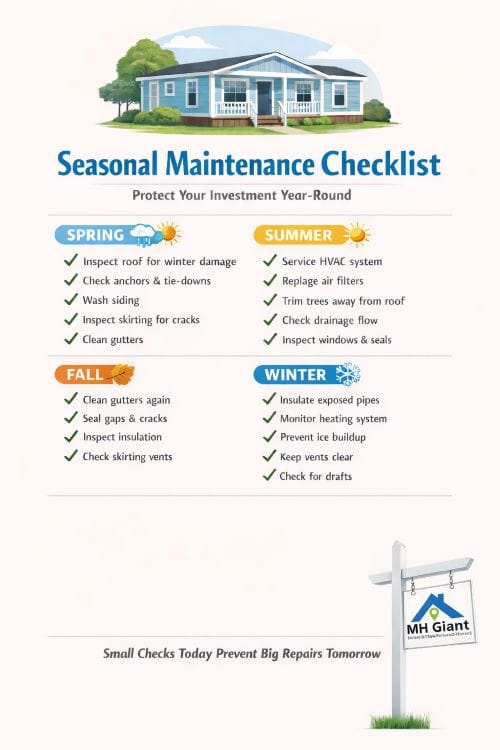
Seasonal Maintenance Checklist
Seasonal checklists often include key Maintenance Tips for Manufactured Home to prepare for weather changes.
Pest Prevention
Manufactured homes can become vulnerable to pests when small gaps or openings develop over time. Even minor damage to skirting, vent screens, or exterior seams can create easy entry points for rodents and insects.
Regularly inspect the skirting around your home to ensure panels are secure and free from cracks. Check vent screens for tears and look closely at any areas where plumbing or utility lines enter the structure. These are common access points for pests. Sealing openings promptly helps prevent infestations that can damage insulation, wiring, and ductwork.
Staying proactive with exterior inspections reduces the likelihood of costly pest-related repairs later.
Insurance & Documentation
Routine maintenance does more than protect your home physically, it also protects you financially.
If you ever need to file an insurance claim, your provider may request proof that the home was properly maintained. Inspection notes, repair receipts, and service records can make the difference between a smooth claim process and a denied one.
Keeping simple documentation is enough. Record the date of inspections, note any repairs completed, and save contractor invoices. Organized records demonstrate responsible ownership and can significantly strengthen your position if a claim arises.
Maintenance & Resale Value
Consistent upkeep has a direct impact on resale value. Well-maintained manufactured homes tend to sell faster and attract stronger offers.
Buyers pay close attention to visible condition. A clean roof, stable foundation, properly functioning systems, and the absence of obvious damage all signal that the home has been cared for responsibly. Homes that show ongoing maintenance history also move through inspections and appraisals more smoothly. Knowing a few Maintenance Tips for Manufactured Home can extend the life of your investment.
In short, maintenance is not just about preventing problems. It is about protecting equity and maximizing future value.
When to Call a Professional
While many maintenance tasks are homeowner-friendly, certain repairs require licensed professionals. Structural re-leveling, anchor replacement, major roof work, and electrical upgrades should not be handled as do-it-yourself projects. Experts share easy Maintenance Tips for Manufactured Home that anyone can do themselves.
Attempting complex structural repairs without proper certification can void warranties and even impact insurance coverage. When in doubt, consulting a qualified manufactured home specialist is the safest and most cost-effective decision.
Common Maintenance Mistakes to Avoid
Most expensive repairs begin as small issues that were ignored. Delaying attention to minor roof leaks, allowing water to pool beneath the home, skipping HVAC filter changes, postponing re-leveling, or neglecting damaged skirting can all lead to larger structural problems.
The key is early action. Small issues rarely stay small. Learning the right Maintenance Tips for Manufactured Home can save you money and headaches in the long run.
The Cost of Preventative Maintenance
Preventative maintenance is remarkably affordable compared to major repairs. Most routine upkeep can be handled for little to no cost beyond minor materials and occasional service appointments. In many cases, homeowners spend only a few hundred dollars per year to stay ahead of problems.
By contrast, structural repairs caused by long-term neglect can easily reach several thousand dollars or more. Prevention is always less expensive than correction, and consistent attention dramatically reduces financial risk. A maintenance checklist is a handy way to keep track of all essential Maintenance Tips for Manufactured Home.
Final Thoughts: Small Checks = Big Savings
Manufactured homes are durable, energy-efficient, and built to last. But like any home, they reward proactive ownership.
The difference between a 25-year home and a 60-year home is rarely construction quality alone. It is maintenance consistency.
The homeowners who:
- Inspect twice per year
- Address minor issues immediately
- Control moisture and drainage
- Maintain HVAC and plumbing systems
Are the ones who avoid five-figure repair bills.
The formula is simple:
Small checks prevent big problems.
When you protect your roof, manage drainage, monitor leveling, and document upkeep, you are not just maintaining a home. You are protecting equity, resale value, and long-term stability.
Manufactured homes today are engineered systems. When those systems are maintained properly, they perform exceptionally well for decades.
Quick Reference Maintenance Summary
If you want to keep it simple, remember these four priorities:
- Keep water away from your home.
- Keep your home level and anchored.
- Keep air flowing efficiently.
- Fix small problems immediately.
That is it.
Do those four things consistently, and your manufactured home can provide safe, comfortable housing for generations.
Need Help Buying or Selling a Manufactured Home?
At MH Giant, we help homeowners protect, maintain, buy, and sell manufactured homes with confidence. Whether you’re preparing to list your home or researching long-term ownership, understanding maintenance is one of the smartest steps you can take.
Because the best way to avoid costly repairs…is to stop them before they start.