 Key Takeaways
 Key Takeaways
- Lot rent is usually not tax-deductible for personal residences
- It may be deductible for business or rental use
- Home office deductions can allow partial write-offs
- State tax credits may still apply
- Always confirm with a tax professional for your situation
Is lot rent tax-deductible? Quick Answer…
In most cases, lot rent is not tax-deductible for homeowners. Because lot rent is considered a personal living expense, similar to apartment rent, it usually cannot be written off on your federal income taxes. However, there are limited exceptions depending on how the home is used.
Why Lot Rent Is Usually Not Deductible
When you own a mobile or manufactured home in a park, you typically own the home itself but rent the land it sits on. The IRS treats this monthly lot rent as a housing expense, not as mortgage interest or property tax.
According to general guidance from the Internal Revenue Service, personal rent payments for a primary residence are not deductible for most taxpayers, regardless of whether the home is a mobile home, apartment, or condo.
Situations Where Lot Rent May Be Deductible
While most homeowners cannot deduct lot rent, certain situations can change how the expense is treated for tax purposes. These exceptions generally apply when the mobile or manufactured home is used to produce income or support a business, rather than serving solely as a personal residence. In those cases, lot rent may be classified as an operating expense instead of a personal living cost.
For example, if the home is rented to tenants, lot rent is often considered a necessary expense for maintaining the rental property. Similarly, homeowners who use part of their home exclusively and regularly for business may be able to deduct a proportional share of lot rent under home office rules. The deductible amount is typically based on the percentage of the home used for business activities.
It’s also important to note that deductions are not automatic. Proper documentation, consistent use, and compliance with tax rules are critical. Because these situations can vary by state and individual circumstances, many homeowners choose to consult a qualified tax professional before claiming any deductions.
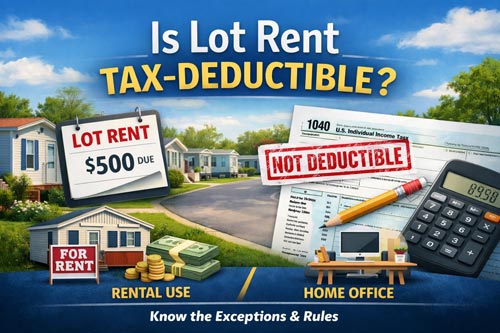
1. Rental or Business Use
If the mobile or manufactured home is used as:
- A rental property
- A business location
- A home office that meets IRS requirements
Then lot rent may be deductible as a business or rental expense.
2. Home Office Deduction (Limited)
If you qualify for the home office deduction, a portion of your lot rent may be deductible based on the percentage of the home used exclusively for business.
This is common for:
- Self-employed professionals
- Online business owners
- Consultants working from home
3. State or Local Tax Credits
Some states or municipalities offer:
- Property tax credits
- Rent-related rebates
- Senior or low-income housing credits
These are not federal deductions, but they can still reduce your overall tax burden.
Complete Guide to Mobile and Manufactured home Industry Terms

What Is Often Tax-Deductible for Mobile Home Owners?
Even if lot rent isn’t deductible, you may be able to deduct:
- Mortgage interest (if the home is financed and qualifies as a primary residence)
- Personal property taxes on the home (common in many states)
- Sales tax paid at purchase (in some situations)
Bottom Line
For most mobile and manufactured homeowners, lot rent is simply part of the monthly cost of living and cannot be deducted on federal taxes. However, if your home is used for business, rental income, or qualifies for specific credits, there may be ways to reduce your tax burden.
When in doubt, consult a qualified tax professional who understands manufactured housing and local regulations.