Key Takeaways
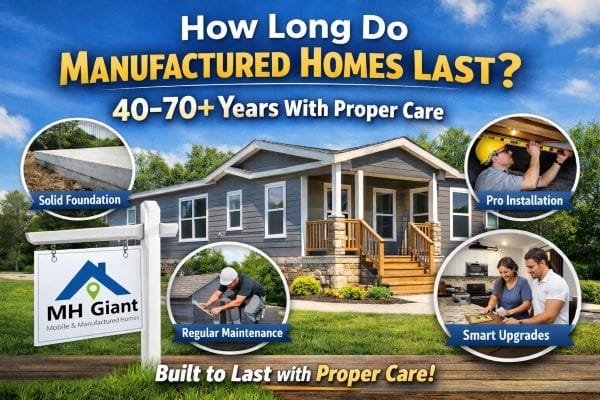
- Modern manufactured homes can last 40 to 70+ years. Homes built after 1976 follow federal HUD construction standards that greatly improved durability and safety.
- Professional installation plays a major role in lifespan. Proper leveling, secure anchoring, and a stable foundation help prevent structural stress over time.
- Regular maintenance extends the life of the home. Routine roof checks, sealing windows, maintaining skirting, and monitoring plumbing and HVAC systems help prevent costly issues.
- Upgrades and improvements can keep homes livable for decades. Replacing roofing, siding, flooring, and energy systems over time helps maintain both comfort and long-term value.
If you’re considering buying a manufactured home, one of the most common questions is simple: How long do manufactured homes last?
The short answer:
Modern manufactured homes can last 40 to 70 years , or even longer , with proper maintenance.
But the real answer depends on several important factors. Let’s break it down clearly.
The Average Lifespan of a Manufactured Home
Manufactured homes built after 1976 follow strict federal construction standards established by the U.S. Department of Housing and Urban Development under the HUD Code.
Because of these regulations:
- Homes are built to national safety standards
- Wind, fire, plumbing, electrical, and structural codes must be met
- Materials and engineering standards are consistent across states
Modern manufactured homes are very different from pre-1976 “mobile homes.”
Typical Lifespan:
- Pre-1976 mobile homes: 20–30 years (varies widely)
- Post-1976 manufactured homes: 40–70+ years
- Well-maintained homes on permanent foundations: Comparable to site-built homes
In fact, when properly installed and maintained, there is no fixed expiration date on a manufactured home.
What Determines How Long a Manufactured Home Lasts?
1. Installation Quality
A professionally installed manufactured home on a stable, properly engineered foundation can last decades longer than one that is poorly set up. Installation is one of the most important factors in determining long-term durability.
Unlike site-built homes that are constructed directly on their foundation, manufactured homes are transported and then placed. That means correct setup is critical from day one.
Why Installation Matters
When a home is not properly leveled or anchored, small structural imbalances can develop. Over time, these minor issues can turn into:
- Cracked drywall
- Doors and windows that won’t close properly
- Uneven or soft floors
- Roof stress and seam separation
- Plumbing line strain
These problems don’t usually happen overnight. They develop slowly due to constant structural tension.
Key Installation Factors
Proper Leveling
The home must be precisely leveled during setup. Even slight unevenness can place pressure on the frame and interior components. Manufactured homes may need periodic re-leveling over time as soil settles.
Secure Anchoring
Homes must be anchored according to local wind zone requirements. Anchoring systems prevent shifting during storms and high winds, and they reduce long-term movement stress on the structure.
Foundation Type
Permanent foundations, such as concrete slabs or engineered pier systems, generally provide better long-term stability compared to temporary block setups.
Drainage Around the Home
Water pooling around the foundation can lead to soil erosion, settling, or moisture intrusion. Proper grading and drainage systems protect both the foundation and the subfloor.
Skirting Ventilation
Skirting should allow adequate airflow underneath the home. Poor ventilation can trap moisture, leading to mold, insulation damage, or frame corrosion.
A high-quality installation protects the structural integrity of the home from the beginning. In many cases, homes that experience premature aging do so because of improper setup, not because of how they were built.
Investing in professional installation and periodic inspections can significantly extend the life of a manufactured home and protect its long-term value.
2. Climate and Location
Homes in harsh climates may require more maintenance.
Environmental factors include:
- Heavy snow loads
- Coastal humidity and salt air
- Extreme heat
- Frequent storms
Modern HUD-code homes are engineered for specific wind zones, but routine care still matters.
3. Ongoing Maintenance
This is the biggest factor.
Regular maintenance includes:
- Roof inspections every 1–2 years
- Sealing windows and doors
- Checking plumbing connections
- Maintaining skirting
- Servicing HVAC systems
- Re-leveling if necessary
Think of it this way:
A neglected manufactured home may age quickly.
A maintained one can last generations.
4. Upgrades and Renovations
Manufactured homes can be updated just like site-built homes:
- New roofing materials
- Updated siding
- Modern flooring
- Energy-efficient windows
- Kitchen and bath remodels
Updating major systems extends usable life significantly.
Are Manufactured Homes Built to Last?
Yes. Modern manufactured homes are:
- Engineered for transportation stress
- Built in climate-controlled factories
- Constructed with standardized quality control
- Required to meet federal safety codes
Because they are built indoors, they avoid many moisture exposure issues that site-built homes face during construction.
Do Manufactured Homes Appreciate Over Time?
Lifespan and value are related but not identical.
Factors influencing long-term value:
- Whether the home is on owned land
- Permanent foundation vs. leased lot
- Market demand
- Condition and updates
- Local real estate trends
A well-maintained manufactured home on private land may appreciate similarly to traditional housing in strong markets.
Can a Manufactured Home Last 100 Years?
While uncommon, it’s possible with:
- Structural upkeep
- Roof replacements
- Proper foundation care
- Interior renovations over time
Just like site-built homes, components wear out, but they can be replaced.
The structure itself does not automatically “expire.”
Signs a Manufactured Home Is Aging
Watch for:
- Uneven floors
- Roof leaks
- Soft spots in subflooring
- Rusting frame components
- Outdated electrical systems
- Persistent moisture issues
Most of these problems are repairable if addressed early.
Final Answer: How Long Do Manufactured Homes Last?
40–70 years is common. Longer is possible.
With:
- Proper installation
- Routine maintenance
- Timely upgrades
Modern manufactured homes are durable, safe, and long-term housing solutions.
The idea that they only last 20 years is outdated and based largely on pre-1976 construction standards.